Multi-location · US & Canada
Multi Location AR Menu Management for Small Restaurant Groups (2026)
How restaurant groups with 2 to 10 locations manage AR menus centrally, keep pricing consistent, allow local specials, and use Growth tier analytics.
2026-09-06 · 9 min read · BeforeTable
What multi location AR menu management actually means
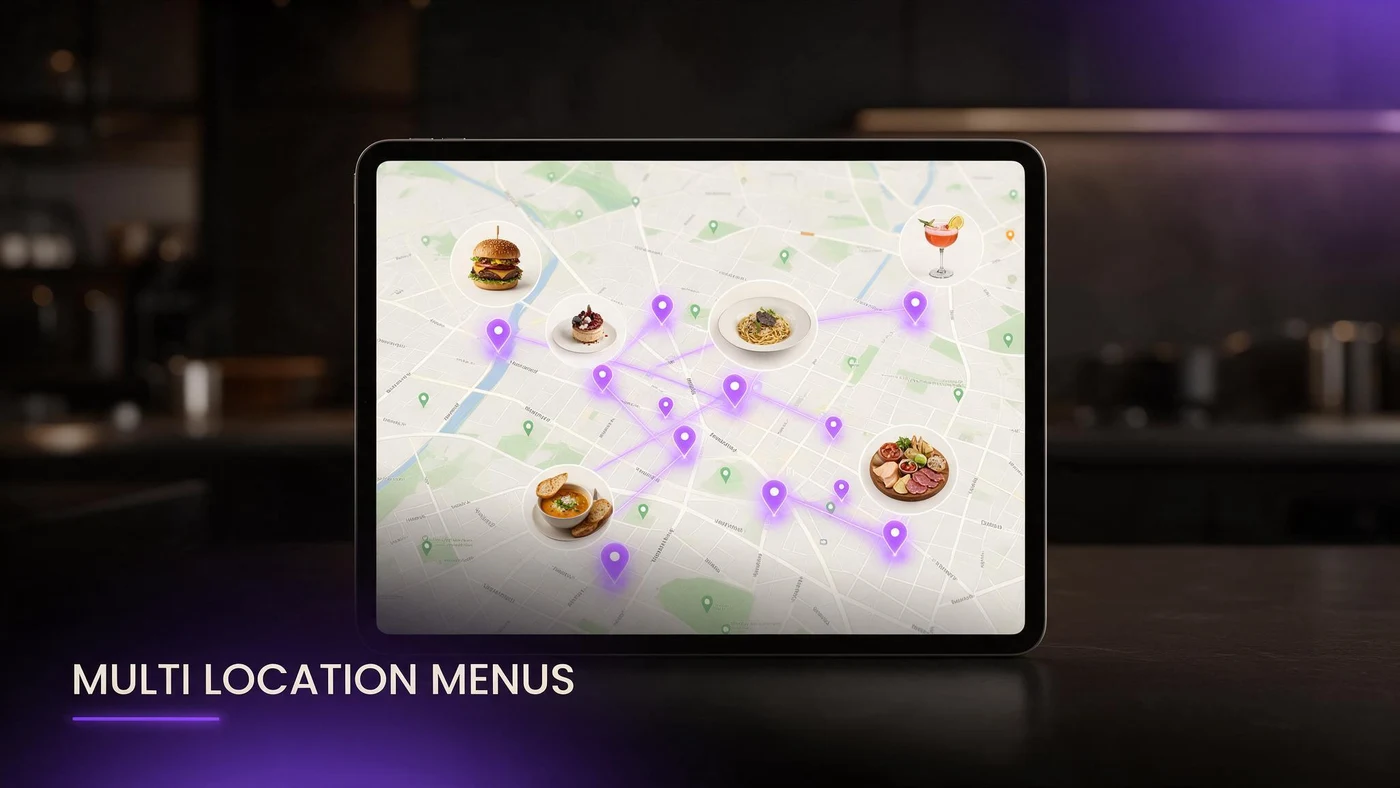
Multi location AR menu management means running one consistent set of dishes, prices, and 3D previews across every restaurant in your group, while still allowing each location to add a genuine local special when it makes sense. For a group with two to ten locations, that balance matters more than picking fancy software features.
Most small groups start with one location on BeforeTable, prove the guest experience works, then roll the same hero dishes out to sister locations instead of building each menu from scratch.
Centralized core, local flexibility
Your signature dishes, the ones that define the brand, should look and cost the same at every location. A seasonal special tied to a specific market or a regional supplier is where local flexibility earns its place.
Why this matters more past two locations
One location can survive inconsistent updates. Once you have three or more, a dish priced differently at different locations in the same city creates confusion for guests who visit multiple spots and for staff comparing notes.
The consistency problem groups run into first
The first sign of a consistency problem is usually a guest screenshot: a photo of one location's menu price next to a different price at another location. Small differences add up to a bigger trust problem than any single mistake.
Price drift between locations
Without a shared source, one manager raises a price to cover local costs while another forgets to update. AR menu management centralizes that so a price change happens once and applies everywhere it should.
Dish drift when managers update independently
A manager who tweaks a description or swaps a photo without telling anyone creates a mismatch between locations that guests eventually notice, especially regulars who visit more than one spot.
Setting up your hero dishes once, for every location
Photograph and upload your signature dishes once, using the same four angle process across every location's kitchen if plating differs slightly. The goal is one consistent 3D model per dish, not one per location.
Pick the same three to five hero dishes everywhere
Your AR star items should be the dishes every location actually serves the same way. If one location plates a dish differently, fix the plating before you put it in AR, not after.
Reuse photography guidance across your team
Send every location manager the same photo checklist so a dish uploaded from one kitchen looks consistent with the same dish uploaded from another. Our guide at beforetable.com/blog/dish-photography-angles-for-ar-menus covers the angles and lighting to standardize on.
Allowing local specials without breaking consistency
Local specials are not the enemy of consistency. A regional dish, a supplier driven special, or a location specific event menu can sit alongside your core AR dishes without confusing guests, as long as it is clearly labeled as local.
Keep local specials in a separate category
Group local only items under their own menu category rather than mixing them with your core hero dishes, so guests understand which items travel across the brand and which are unique to that location.
Limit how many local specials each location can add
A cap of one or two local specials per location keeps the menu from sprawling into inconsistency again. Growth plan analytics can help decide which local specials are worth keeping past a trial period.
Who should manage pricing across locations
One person or a small team should own core dish pricing across the group, even if individual location managers handle day to day operations. That does not mean centralizing every decision, only the pricing and dishes that represent the brand.
Local managers can still flag when a cost increase makes a price change necessary. The change should apply to the shared dish, not create a one off exception at a single location.
Using analytics to compare locations on Growth
Growth plan analytics, available at $200 per month for 50 AR dishes, lets a multi location group see which dishes get scanned most at each site. That is useful for deciding whether a local special deserves to become a core menu item everywhere.
Compare scan patterns, not just sales guesses
Analytics on Growth shows guest interaction with the AR preview itself, which is a more direct signal than assuming a dish is popular based on anecdotal feedback from one manager.
Decide new core dishes based on real data
If a local special performs well across analytics at the one location testing it, that is a reasonable case to roll it out group wide instead of guessing based on a single manager's opinion.
Rolling out AR to a new location
When you open or onboard a new location, reuse the existing hero dish models and photos instead of starting from zero. Only the local specials and the QR code need to be new.
Test the guest link on iPhone Safari and Android Chrome at the new location specifically, since Wi-Fi and signal conditions can differ from your original site even with the identical menu setup.
Common mistakes multi location groups make
The biggest mistake is letting each location manage its own BeforeTable setup independently from day one, which recreates the price and dish drift problem the centralized approach was supposed to solve.
A second common mistake is adding too many local specials too fast, before the core menu consistency across locations is solid. Fix the shared foundation first, then layer in flexibility.
What this costs across a small restaurant group
Pricing is per account, not automatically shared across locations unless you plan for it. Free covers 3 AR dishes at $0 for a single test location. Starter is $20 per month for 15 dishes, and Growth is $200 per month for 50 dishes with analytics, which becomes more valuable the more locations you are comparing. Enterprise is custom for larger groups. See the full breakdown at beforetable.com/blog/beforetable-pricing-explained.
Start with one location, then standardize
Prove your hero dishes and pricing structure at one location on Free or Starter before rolling AR menus out group wide. That single test location becomes your template for every location that follows.
Multi location AR menu management is less about software and more about deciding, in advance, what stays consistent everywhere and what each location is allowed to change on its own.
Frequently Asked Questions
What is multi location AR menu management?
It means running one consistent set of hero dishes, prices, and 3D previews across every restaurant in a small group, while still allowing limited local specials.
How many locations need centralized AR menu management?
Any group with two or more locations benefits, since price and dish drift between locations becomes noticeable once guests can compare more than one site.
Can each location have its own local special in AR?
Yes, as long as local specials sit in a separate category from the core hero dishes that stay identical across the group.
How do I keep prices consistent across locations?
Have one person or a small team own pricing for shared dishes, and route any cost driven changes through that owner instead of letting each location adjust prices independently.
Do I need a separate BeforeTable plan for each location?
Pricing is per account, so plan for how many total AR dishes you need across the group, whether that is one shared account or one per location.
Does Growth plan analytics compare locations?
Growth's analytics dashboard, at $200 per month, shows guest interaction with the AR preview, which can help compare how a dish performs at different sites.
How do I roll out AR to a new location?
Reuse your existing hero dish models and photos, then test the guest link on iPhone Safari and Android Chrome at the new location specifically.
What is the biggest risk with multiple managers editing menus?
Independent edits recreate price and dish drift between locations, which is the exact problem centralized management is meant to prevent.
Should local specials use the same AR dish slots as core dishes?
They share the same plan limit, but keeping them in a separate category makes it clear to guests which items are brand wide and which are local only.
How much does BeforeTable cost for a small restaurant group?
Free is $0 for 3 AR dishes at one location. Starter is $20 per month for 15 dishes, and Growth is $200 per month for 50 dishes with analytics.
Do guests need an app at any location?
No. Every location uses the same WebAR path in Safari and Chrome, with no guest app download at any site.
Can I test AR at one location before rolling out to others?
Yes, and it is the recommended approach. Prove the hero dishes and pricing structure at one location first, then copy the setup to the rest of the group.
Who should own pricing decisions across locations?
One person or a small team should own core dish pricing for the group, even if individual managers handle daily operations.
How do I standardize dish photos across multiple kitchens?
Send every location manager the same photo checklist covering angles and lighting, so the same dish looks consistent no matter which kitchen uploaded it.
Does BeforeTable replace a group's POS system?
No. BeforeTable is a WebAR menu and light order tool across locations, not a replacement for a POS system like Toast.
What devices should I test at each new location?
Test iPhone Safari and Android Chrome at every new location, since Wi-Fi and signal conditions can vary even with an identical menu setup.
How many local specials should one location be allowed?
A cap of one or two local specials per location keeps the menu from sprawling into inconsistency across the group.
What happens if one location changes a shared dish without approval?
That creates the price or dish drift problem centralized management prevents. Route any change to a shared dish through the person who owns pricing for the group.