Guest experience · US & Canada
NFC Restaurant Menu vs QR Code: What US and Canada Owners Should Pick in 2026
Compare NFC tap menus and QR code menus for US and Canada restaurants. Cost, guest flow, WebAR upgrades, and when QR still wins at the table.
2026-08-06 · 8 min read · BeforeTable
What NFC and QR restaurant menus actually do at the table
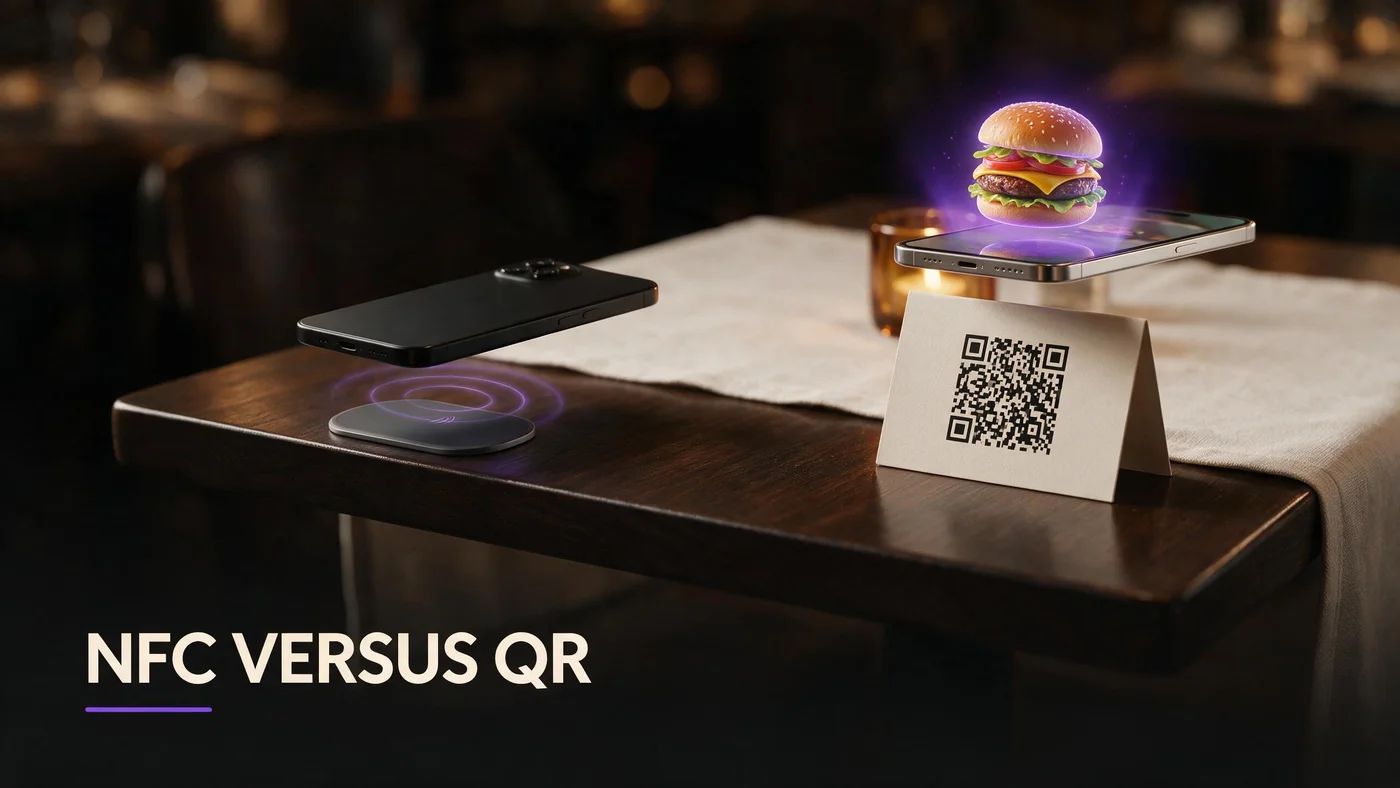
NFC restaurant menu vs QR code is not a tech rivalry for most independents. It is a choice about how guests open your menu on their phone. NFC uses a tap on a small tag or sticker. QR uses a camera scan of a printed code. Both can link to the same web page.
For US and Canada operators, the real question is guest friction, replacement cost, and what happens after the link opens. A tap or scan that lands on a flat PDF solves hygiene. A tap or scan that opens WebAR in Safari or Chrome solves portion anxiety and upsells.
NFC tap opens a URL in the browser
Near Field Communication tags store a link. iPhone and many Android phones open that link when a guest taps the tag with the top of the phone. No camera app required. Staff must place tags where taps are obvious and tags stay clean.
QR scan opens the same URL through the camera
QR codes encode the same menu link. Guests open the camera or scanner, point at the code, and tap the banner. Almost every diner already knows this flow from the last five years of contactless menus.
Why QR codes still win for most independent restaurants
QR won the training battle. Guests, staff, and print shops all understand table tents with a square code. NFC adds hardware cost per table and replacement cycles when tags peel or fail.
QR also scales across windows, receipts, takeout bags, and social posts without new chip inventory. One generated link can power every surface.
Zero marginal cost per table
Print one QR tent for a test night. Reprint when the URL changes if you use a static code, or keep the same print when your menu platform supports live updates. NFC tags cost money per unit and sometimes per rewrite.
Staff already know the script
Scan the QR to see the menu. That line works in English and French across Canada and the US. NFC requires you to teach tap here and show phone placement, which slows busy services.
Where NFC tap-to-menu fits in 2026
NFC shines when you control a fixed surface and want a premium feel. Bars with permanent coasters, hotel room service trays, and counter pick-up stations can embed tags once and forget camera steps.
It is weaker when tags sit on cloth, outdoors, or high-spill zones. Water, heat, and daily table turns kill adhesive tags faster than laminated QR tents.
Fixed counters and repeat guest paths
Coffee bars and fast casual pick-up windows benefit from tap-and-go when the same guest returns weekly. The novelty wears off, but speed at the counter can matter more than table romance.
Premium positioning, not magic
NFC feels modern in marketing copy, but guests still judge the page that loads. A tap into a slow PDF does not beat a fast QR into a visual WebAR menu.
NFC versus QR for guest experience
Compare the first ten seconds after a guest sits down. QR needs one scan. NFC needs one tap. Both fail if the landing page is a zoomed PDF or demands an app download.
Win on what opens next: prices, allergens, photos, and optional 3D preview in the mobile browser with no guest app.
Camera shy guests
Some guests struggle with QR in low light or with older phones. NFC removes the camera step. Train hosts to offer either path if you run a hybrid pilot.
Group tables and multiple scans
Groups share one QR tent easily. NFC tags glued to one corner of a large table get missed. Center the access point for either technology.
Cost and hardware: what owners really pay
QR costs are mostly print and design. NFC adds tags, encoding time, and replacements. Neither includes the menu software that powers the link.
Budget both the access method and the menu experience. Cheap access to a weak menu is still a weak guest path.
NFC tag pricing in plain terms
NTAG stickers run from roughly a dollar to a few dollars each depending on volume and encoding. Multiply by tables, add spares, and plan quarterly replacements for high-wear dining rooms.
QR print and laminate
Table tents from a local print shop or in-house laminator cost cents per seat compared with chipped tags. Test one design on a weekend before you order five hundred units.
How WebAR QR menus go beyond tap or scan
Access method is step one. Step two is what the guest sees. WebAR restaurant menus let diners preview a dish in 3D in Safari or Chrome, often with table placement through the camera. No guest app download.
Our definition guide at beforetable.com/blog/what-is-an-ar-restaurant-menu walks through that guest flow in plain language you can reuse on tents, tags, and staff cards.
Same link for NFC, QR, and social
Point every entry path to one visual menu URL. Guests who tap or scan should land on hero dishes with 3D preview, not a separate mobile site.
Safari and Chrome cover most groups
Test iPhone Safari and Android Chrome before launch. WebAR is the upgrade that makes either access method worth promoting beyond a PDF.
Launch plan: start with one table QR this week
Most independents should standardize on QR first, prove the menu experience, then add NFC on a bar or counter if tap speed matters.
Pick three hero dishes, upload photos, wait for Ready status, print one tent, and run a Friday service test.
Photograph four angles per dish
Front, side, top, and three-quarter shots with even light produce better 3D models. Strong inputs beat rushing ten items with dark photos.
Hybrid pilot if you already bought NFC
Encode tags and QR to the identical URL. Measure which path guests use. Keep the winner on every table after two busy services.
Pricing BeforeTable on top of your access method
BeforeTable pricing is independent of NFC or QR. You pay for AR dish capacity and menu tools in USD. NFC tags and print are your operational line items.
Full plan breakdown lives at beforetable.com/blog/beforetable-pricing-explained.
Free, Starter, Growth at a glance
Free: $0, 3 AR dishes, basic QR, order tools. Starter: $20/mo, 15 AR dishes, custom QR, priority processing. Growth: $200/mo, 50 AR dishes, fuller QR tools, analytics. Enterprise is custom.
Upgrade when guests ask for more dishes in 3D
Stay on Free until three hero previews prove reactions. Move to Starter when regulars want AR on more than three items. Choose Growth when you need analytics and a larger visual catalog.
Common mistakes when switching from PDF to smart menus
Owners chase NFC hype or buy expensive tags, then link them to the same PDF they used in 2021. Fix the destination before you debate tap versus scan.
Forcing an app download after tap or scan
App store friction kills table momentum. Keep guests in WebAR through the browser. Say no app needed on every tent and tag.
Start Free with three AR dishes on your QR menu
Pick QR for most tables unless you have a fixed counter use case for NFC. Point every path to a BeforeTable menu with three hero dishes at $0, test on iPhone and Android, then expand to Starter ($20/mo, 15 dishes) when guests want more 3D previews.
The access method gets guests to the menu. Visual WebAR is what makes them confident before they order.
Frequently Asked Questions
What is the difference between NFC and QR restaurant menus?
NFC menus open from a phone tap on a tag. QR menus open from a camera scan of a printed code. Both can link to the same web menu page.
Is NFC better than QR for restaurant menus?
NFC can feel faster at a fixed counter, but QR is cheaper per table, easier to reprint, and already familiar to most US and Canada diners.
Do guests need an app for NFC or QR menus?
No, if you link to a browser menu. BeforeTable uses WebAR in Safari and Chrome with no guest app download for either NFC or QR entry.
How much do NFC tags cost for restaurants?
Encoded NFC stickers often cost roughly one to a few dollars each plus replacements. QR table tents are usually cheaper at scale.
Can I use NFC and QR for the same menu?
Yes. Point both to one URL so tap and scan guests see the same visual menu and prices.
Does iPhone support NFC menu taps?
Modern iPhones open NFC tag URLs in the browser. Test your tags on iPhone and Android before you deploy to every table.
Why do most restaurants still use QR codes?
QR is low cost, easy to print, works on social and takeout, and guests already know how to scan.
Can a QR menu show 3D dishes without an app?
Yes. WebAR menus in Safari and Chrome let guests preview dishes in 3D from a QR or NFC link without an App Store download.
How much does BeforeTable cost with QR menus?
Free is $0 USD for 3 AR dishes. Starter is $20/mo for 15. Growth is $200/mo for 50 plus analytics.
Should I replace PDF menus with NFC or QR first?
Replace the PDF destination with a visual browser menu first. Pick QR for most tables unless you have a strong counter use case for NFC.
Do NFC menus work on Android?
Most modern Android phones read NFC tags. Test your tags alongside iPhone Safari before full rollout.
What should staff say about table menus?
Scan the QR or tap the tag to see the menu in your browser. No app needed. Keep it to two sentences.
How many dishes should I put in AR first?
Start with three hero items on Free: a signature main, dessert, or drink. Prove guest reactions before upgrading plans.
Can I update my menu without reprinting QR codes?
Many digital menu platforms let you change dishes while keeping the same QR link. NFC tags also keep working when the URL stays the same.
Is NFC more hygienic than QR?
Both are contactless compared with shared paper menus. Laminated QR tents and sealed NFC tags both work if you wipe surfaces during service.
Does BeforeTable replace Toast POS?
No. BeforeTable focuses on WebAR menu visualization and light order tools, not full Toast hardware replacement.
What devices work with BeforeTable WebAR?
iPhone Safari and Android Chrome are the primary guest paths. Test both before promoting your table QR or NFC link.
Where should I start with NFC vs QR?
Launch one QR tent with three BeforeTable AR dishes at $0, test Friday service, then add NFC only where tap speed clearly helps.