Outcomes · US & Canada
Reduce Order Regret with AR Preview Before Guests Commit (2026)
How a WebAR preview lets guests rotate and zoom a dish before ordering, cutting portion surprises and remakes, with Free, $20, and $200 plans.
2026-09-19 · 8 min read · BeforeTable
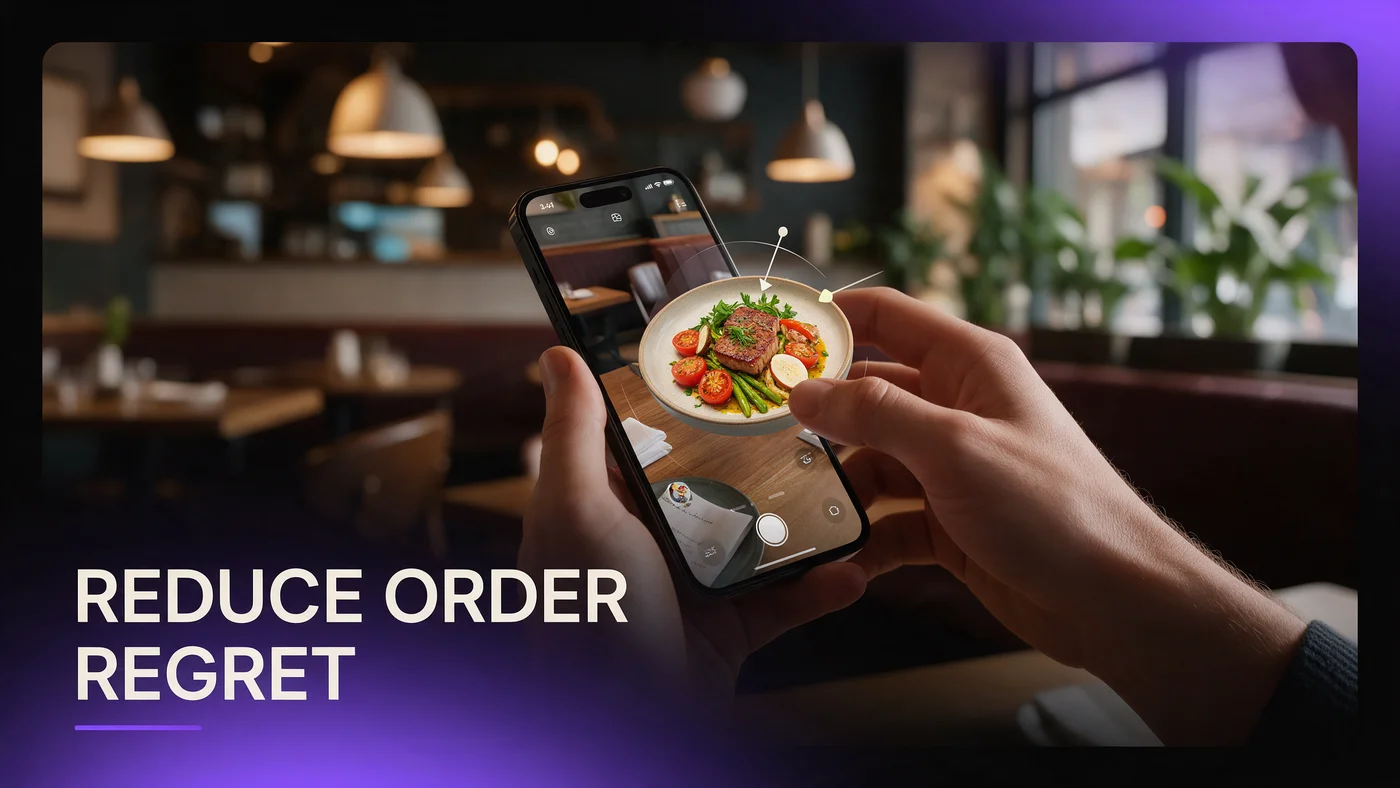
What order regret looks like in a real dining room
Order regret is the moment a dish arrives and the guest's face changes, not because the food is bad, but because it is not what they expected. It shows up as a plate pushed slightly aside, a quiet comment to a dining companion, or a direct question to the server.
None of this necessarily means the kitchen made a mistake. Most of the time the dish matches the recipe exactly. The gap is between what the menu description created in the guest's head and what actually arrived on the plate.
Portion size surprises: the most common regret trigger
Portion size is the single most common source of order regret, in both directions. A guest who expected a personal-size portion and receives a shareable platter feels like they overordered. A guest expecting a generous plate and receiving a modest one feels shorted, even if the portion matches what the kitchen always serves.
When a description undersells or oversells size
Words like generous or hearty mean different things to different guests, and a menu description has no reliable way to convey exact scale. A guest reads large shareable platter and pictures something different from what the kitchen has in mind.
Shareable plates and the guessing problem
Shareable dishes are especially prone to this, since two guests deciding whether one platter is enough for both of them are essentially guessing at size from a sentence, then living with that guess for the rest of the meal.
That's not what I pictured: mismatched expectations
Beyond size, guests form a mental picture of color, sauce coverage, and plating style from a description, and that picture is often wrong in ways that have nothing to do with food quality.
Sauce, plating, and color differences
A dish described as lightly glazed might look heavily sauced to a guest picturing a dry rub. None of this is a kitchen error, but it still produces the same disappointed reaction at the table.
Descriptive menu language versus the real plate
Menu writing is built to sound appetizing, which sometimes pulls it away from precise description. A guest cannot fully separate marketing language from a literal preview of what is coming, and that gap is where regret starts.
How an AR preview changes the moment of ordering
A WebAR preview does not rewrite the menu description. It adds a second, more literal source of information a guest can check before committing, right at the moment they are deciding.
Rotate and zoom before committing
A guest can scan a QR code, rotate the 3D model of the actual dish, and zoom in on portion size and plating before telling the server what they want, closing much of the gap a written description leaves open.
What guests actually do with a 3D preview at the table
In practice, most guests use it for one or two dishes they are unsure about, not the whole menu. That is enough, since the dishes causing the most regret are usually the same handful a restaurant already gets the most questions about.
Remakes and comps: a cost most restaurants undercount
Order regret has a real cost beyond a guest's mood. When a guest sends back a dish because it was not what they expected, the kitchen either remakes it or the table gets comped, and both cost money that rarely gets tracked back to the original cause.
Kitchen time lost to remaking a dish
A remake during a busy service does not just cost the ingredients. It costs ticket time on an already stretched line, which can slow down every other table's food at the same time.
Comps that never show up as a line item
A server who quietly comps a dessert or a side to smooth over a disappointed guest rarely logs the reason as guest expected something different. That cost sits buried inside comp totals, invisible unless someone looks for the pattern.
Staff experience: less apologizing, more confident recommending
Order regret is not just a guest problem. It is a recurring, tiring part of a server's shift, explaining the same dish's size over and over, then apologizing when a guest is still surprised anyway.
Fewer 'that's not what I expected' conversations
When a guest has already seen a rotating preview before ordering, the server spends less time managing disappointment after the fact and more time on the parts of service that actually build a good table experience.
Servers pointing to the preview instead of explaining twice
Instead of describing a dish's size from memory for the fifth time that night, a server can point to the QR code and let the guest see it directly, faster and more accurate than any verbal description.
Where AR previews help most, and where they do not
AR previews are not equally useful across a menu. Knowing where they help most keeps you from spending time modeling dishes that were never a source of regret to begin with.
Dishes prone to regret
Shareable platters, dishes with unfamiliar names or ingredients, and anything where portion size is hard to describe in words are the strongest candidates, since the gap between description and plate is widest.
Dishes that rarely need it
A simple, familiar dish like a plain grilled chicken breast rarely generates surprise, since most guests already have an accurate mental picture of what it looks like before they order.
More on reducing order mistakes with a 3D preview
Order regret and order mistakes overlap but are not identical. A mistake is the wrong dish arriving at the table. Regret is the right dish arriving but not matching what the guest pictured. Our related piece on reducing order mistakes with a 3D preview at beforetable.com/blog/reduce-order-mistakes-3d-preview covers the wrong-dish side in more detail, including how a preview helps guests order the right item in the first place.
Setting up your first regret-reduction test
One week, three dishes
Pick the three dishes your servers field the most questions about, add a WebAR preview to each, and run it for one week. Ask servers whether they notice fewer surprised reactions on those specific dishes, and watch whether remakes or comps tied to those dishes change.
Common mistakes that undercut order regret reduction
The most common mistake is picking dishes at random instead of asking servers which items generate the most confusion first. A second is loading every dish into AR at once, which spreads attention thin instead of proving the idea on the dishes that actually need it.
What this costs to reduce order regret
Free starts at $0 for 3 AR dishes, enough to run the one-week test on your most regret-prone items. Starter is $20 a month for 15 dishes, useful once you want previews across most of a shareables and entrees section. Growth is $200 a month for 50 dishes with analytics, which helps track whether comps or remakes on specific dishes change over time. Full pricing is at beforetable.com/blog/beforetable-pricing-explained.
Start free and see fewer surprised guests
Reducing order regret does not require rebuilding your menu or retraining every server on new scripts. Pick the three dishes guests ask about most, add a WebAR preview, and let guests rotate and zoom before they commit.
Start Free with 3 AR dishes at $0 and see whether table conversations around your most confusing dishes change over a week or two. The FAQ below covers how this works day to day.
Frequently Asked Questions
What is order regret in a restaurant setting?
It is the moment a dish arrives and does not match what the guest pictured, even when the kitchen made the dish correctly.
How is order regret different from an order mistake?
A mistake is the wrong dish arriving. Regret is the right dish arriving but looking different from what the guest expected.
Which dishes cause the most order regret?
Shareable platters, unfamiliar dishes, and anything where portion size is hard to describe in words tend to cause the most surprise.
How does an AR preview reduce order regret?
It lets a guest rotate and zoom a 3D model of the actual dish before ordering, closing the gap a written description leaves open.
Do guests need an app to see the AR preview?
No. WebAR opens directly in Safari on iPhone or Chrome on Android after scanning a QR code, with nothing to install.
Does reducing order regret lower remake costs?
It can help on dishes where regret was the main driver of remakes, though remakes happen for other reasons too, like actual kitchen errors.
How do I know which dishes need an AR preview first?
Ask your servers which dishes they get the most questions about or which ones guests seem surprised by most often.
How long should I test this before deciding if it helps?
About one week on three hero dishes is enough to notice whether server conversations and comps on those dishes change.
Does this replace training servers to describe dishes well?
No. A good verbal description still matters. The preview adds a second, more literal reference guests can check for themselves.
Can AR previews help with comps tied to disappointed guests?
They can reduce comps caused specifically by mismatched expectations, though comps happen for other reasons too, like slow service or kitchen timing.
What is the relationship between this and reducing order mistakes?
That topic focuses on guests ordering the wrong dish entirely. This one focuses on guests ordering the right dish but expecting something different. See beforetable.com/blog/reduce-order-mistakes-3d-preview for the mistakes side.
How much does this cost to test?
Free is $0 for 3 AR dishes, Starter is $20 a month for 15 dishes, and Growth is $200 a month for 50 dishes with analytics.
Do I need the Growth plan to reduce order regret?
No. The Free plan's 3 dishes are enough to test your most regret-prone items before deciding whether to expand.
Does Growth plan analytics track regret directly?
Not directly. It shows guest interaction with previews, which you can pair with your own notes on comps and remakes for a fuller picture.
Which dishes rarely need an AR preview?
Simple, familiar dishes like a plain grilled chicken breast rarely surprise guests, since the mental picture is usually already accurate.
Where can I read more about pricing and setup?
See beforetable.com/blog/beforetable-pricing-explained for pricing details and beforetable.com/blog/reduce-order-mistakes-3d-preview for the related order-mistakes piece.